What Gretel Ehrlich Gets Wrong About Climate Change
If you buy through our links, we may earn an affiliate commission. This supports our mission to get more people active and outside.Learn about Outside Online's affiliate link policy
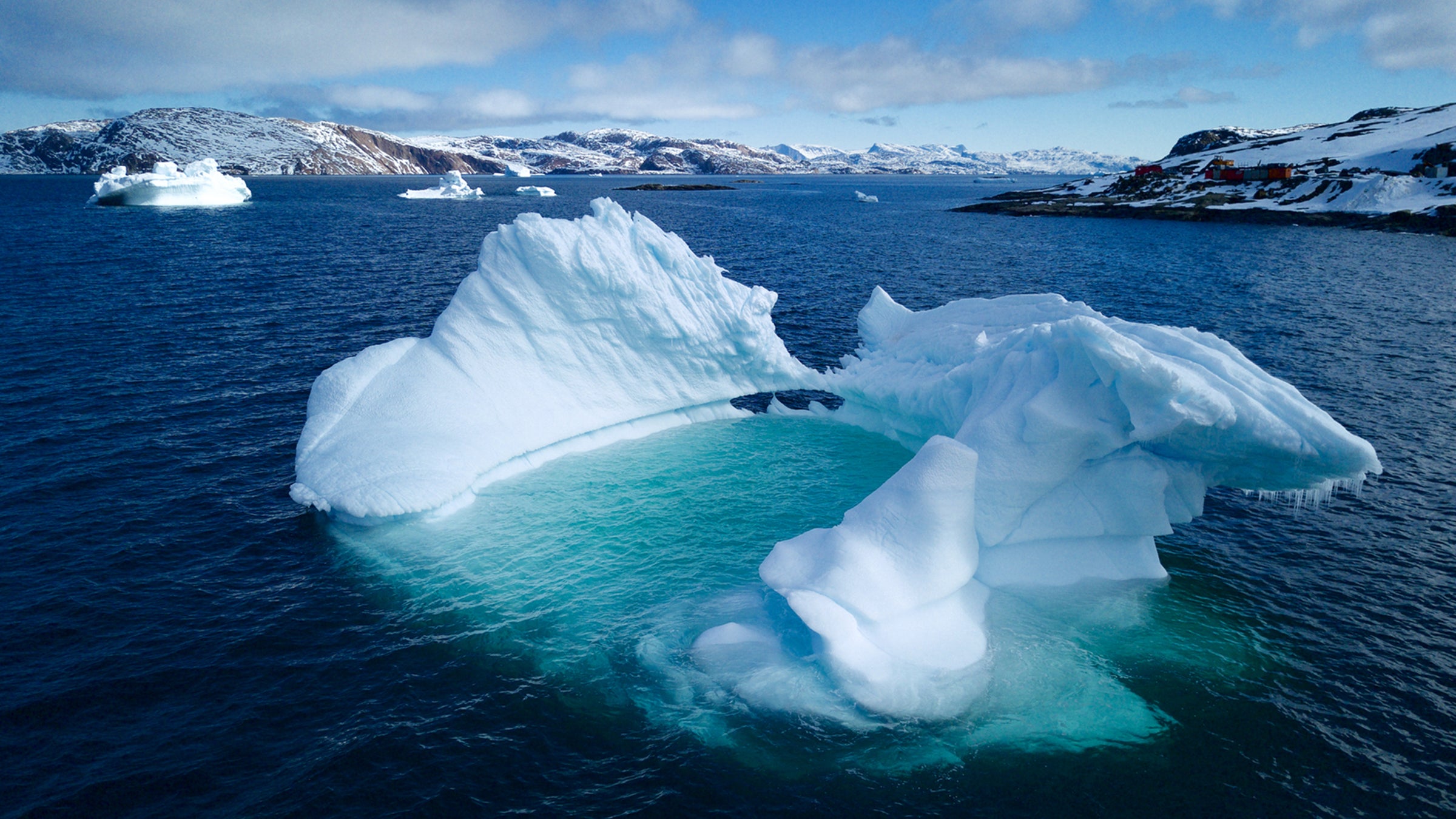
Greenland, at the front line of the climate crisis, melts in spring.(Photo: Adam Sébire/Stocksy)
In the early months of the pandemic, as travel ground to a halt, news outlets and random Twitter users breathlessly pointed out thatsmog was clearing up, animals were roaming the streets, and evenVenice’s canalswere looking better than ever. Many of these “nature is healing, we are the virus” factoids were eventuallydebunked, thenmemed, then shown to be a blip ofunearned optimismas global warmingcontinued apace. Looking back, they mostly seem like atone-deaf wayto celebrate the side effects ofa virus that has devastated millions of people. It felt odd to be reminded of this early pandemic phenomenon in the afterword of beloved nature writer Gretel Ehrlich’s new book,Unsolaced. “As the pandemic spreads, animals wander through empty cities as if to say that we humans have been in the way all this time,” she writes in an ever-so-brief nod to the coronavirus. I certainly don’t wish she’d writtenmoreabout COVID-19. It’s just that the sentiment, vaguely waving as it does at a complex global catastrophe, encapsulates the elements of the book that left me feeling cold.
Ehrlich describesUnsolacedas a follow-up toThe Solace of Open Spaces, a series of essays about life in Wyoming published in 1986, which remains a treasured piece of outdoor literature for many. In this new memoir, she revisits friends and familiar landscapes from Wyoming to Greenland,despairing at how they’ve been affected by climate change. As a work of nature writing,Unsolacedis a demonstration of what Ehrlich does best: use lush prose to breathe life into landscapes that have brought her comfort. But when she turns her analysis to the proliferating signs of a warming world, Ehrlich’s insights fall short.
In just 256 pages, Ehrlich provides a quick overview of four decades of her life, often expanding on topics she’s covered in her many other books. She describes dedicating herself to ranching in Wyoming after her partner died when they were both 29. She recounts being struck by lightning in 1991, then spending a couple painful years recovering before traveling around the world, writing about dramatic landscapes and regenerative land practices. There’s plenty to like in these pages. Ehrlich devotes lots of space to fascinating acquaintances like Jens Danielsen, a hunter in northern Greenland whom she first introduced to readers in her bookThis Cold Heaven. And her descriptions of land and animals are as evocative as always. A basin in northern Greenland, for instance, is “distinct, direct, precise. Yet everything seemed to overlap everything else: crumbling glacier ice, meltwater splashing against pincushions of moss, moss edged by shoaling gravels.”
These stories are not just a rehashing of Ehrlich’s past work: she clearly means to set this book apart with an undercurrent of unease about melting ice and increasing land desertification. But while Ehrlich usually writes about her inner life with precision, she analyzes her climate despair in nihilistically broad strokes. “We indulge in delusional behavior to protect ourselves from painful realities,” she writes late in the book. “We…make demands on the earth without ever inquiring what the needs of the earth might be.” These sweeping observations are, disappointingly, the most thorough analysis Ehrlich provides on climate change as a whole.To be fair, maybe we shouldn’t expect Ehrlich to provide in-depthclimate analysis in a memoir. But she doesn’t apply her usual self-awareness to the personal aspects of climate change, like the carbon footprint she generates from traveling so much. Instead, the climate crisis is something to be pointed at from a distance; it appears in terms that barely mean anything. This gives the book a feeling of impotence at best and dangerously misdirected blame at worst.
Although 100 companies are responsible formore than 70 percentof the world’s carbon emissions, Ehrlichmentions the specific causes of climate change only a handful of times and names corporations even less frequently. In one of the few passages that mention extractive industries in any detail, Ehrlich recalls driving behind Halliburton oil field trucks near her home in California. She spends only a paragraph on Halliburton, mostly to wave a hand at the “social ills that come with oil and gas extraction: drugs, prostitution, and domestic violence.” Earlier in the book, in western Zimbabwe, she describes farmers who burn fields rather than use natural fertilizer, as if they’re contributing as much to the problem as extractive industries. “It’s right here that we are causing your beloved Greenland ice to melt!” jokes her companion, ecologist Allan Savory.Unsolacedso often turns its gaze away from the responsible corporations and toward groups of people who hardly have any impact that it starts to feel willfully ignorant.
In these moments, the bookfeels like a callback to writers like Henry David Thoreau, who idealized nature while being unwilling to think critically about the “unnatural”—politics, capitalism, other people. But in the 21st century, that wilderness versus humans binary just blocks the way to seeing our crisis clearly: to argue that “we are the virus,” as Ehrlich so often does, dispels any responsibility for more rigorous thought.Writers like Wendell Berry andJennifer Pricehave demonstrated that it’s possible to be a steward of the environment while acknowledging that wilderness is not something separate from where humans live—in fact, it’s counterproductive to set the two in opposition.
When Ehrlich describes man-made global warming without addressing politics, extractive industries, or socioeconomic nuances, it’s not just dismissive. It gives a completelyinaccurate idea of what climate change really looks like, as it’s already disproportionately affectingclimate migrantsandcommunities of colorand not just the untouched landscapes Ehrlich holds dear. She doessee humans as a part of the solution, but her narrow mindset clouds her vision of a brighter future: she points only to the broad idea that we must all embrace regenerative land practices, and to the oddly specific example of Pleistocene Park, a Siberian reserve that recreates an ancient grazing ecosystem. It’s no wonder her writing on climate change feels so self-defeating;Unsolacedpresents a world in which those who don’t have access to pristine, unpeopled nature aren’t even worth including in the conversation.
In the end, one of the book’s greatest strengths turns out to be a weakness as well. After all, Ehrlich is just applying the tools of nature writing to climatechange, laying out a series of images and observations to give more of an impression than a thesis. Ehrlich does often share striking descriptions of what climate change looks like on the ground: “As we flew north the next day, the icebergs’ rounded shoulders suggested premature old age,” she writes of one visit to Greenland. But this particular set of fleeting images and pointed statements doesn’t add up to a very enlightening portrait of climate change. Just as it seems increasingly difficult to write nature books that don’t address global warming, it seems half-baked to write about climate change in the purely aesthetic terms of nature writing. It’s easy to point out all the ways nature suffers in a warming world; the equally beloved David Attenborough did this just asbelatedlyin his 2020 documentary,A Life on This Planet. But most of those who love the work of Ehrlich or Attenborough have probably been worried about climate change for years, and younger readers don’t need a reminder of how much better it used to be. It’s worth holding our most established nature writers to a higher standard than pointing out the obvious.